
Youth reflections: 2026 Guatemala Service Trip
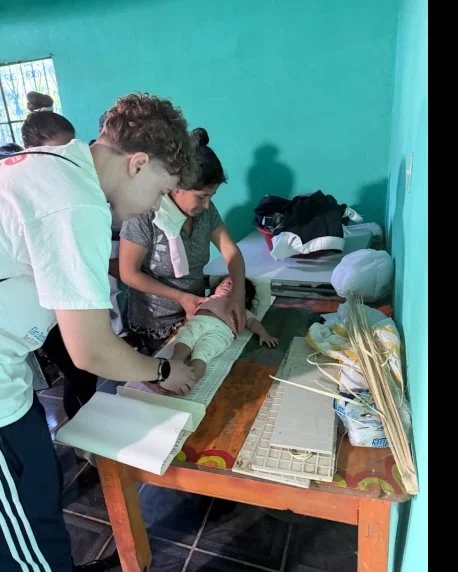
Last Sunday our youth spoke to the congregation, giving reflections of their service trip to Guatemala. In this new series, one of their reflections will be published each week for Pilgrims to enjoy.
A Reflection from Pilgrim Youth Ethan McNair
Throughout our time in Calhuitz, as well as other places we visited in Guatemala, we shared the responsibility of daily devotionals among ourselves. One particular story from the Bible stood out to me, and I want to share its relevance to recurring themes I saw during the service trip.
The story was from Exodus 2:11-22, Moses killing an Egyptian for brutally beating a Hebrew slave. Moses later on confronted two other Hebrews for fighting, this time confronting the Hebrew that was in the wrong. To which the Hebrew responded, “Who made you our ruler and judge? Are you going to kill me like you killed that Egyptian?” Once Pharaoh learned of Moses killing the Egyptian, he had to flee to Midian so as not to be executed.
This story made me think a lot about privilege and superiority, because it challenged me to think about how people use their power, identity, and position, even when they think they are doing something just. Though Moses was born Hebrew, he grew up under Pharaoh’s household, giving him the privilege of an Egyptian, which necessarily included education, security, and political power. Moses’s heritage gave him a unique perspective regarding Egyptian superiority as something that viewed the Hebrew people as inferior and expendable. The Pharaoh’s desire to execute Moses reflects the dangers of malicious power, which constitutes a need to reinstate order by whatever means when it is challenged.
Ultimately, this story prompted me to consider how myself and others perceived our intentions for serving the communities we visited in Guatemala. More so, was my service coming from a place of superiority and privilege, or was it coming from a place where I wanted to empower the communities and learn more about them? Safe to say, it was the latter, but I do find myself at times thinking that the way some things in America are done is the right way, such as wearing shorts in the summer (it was not culturally appropriate to wear shorts where we were). But who gets to decide what is right?